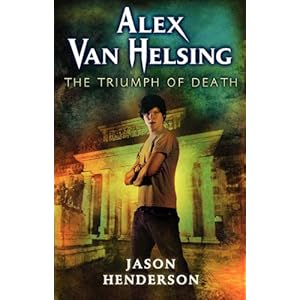
Book 3, Triumph of Death, opens with a dizzying, James Bond-style action piece as the plane returning Alex to school is hijacked by vampires that hack a Polidorium computer and disable the cockpit, requiring Alex to fight them in freefall without a parachute. After surviving this harrowing experience, he gets to briefly catch up with his friends Paul, Sid and Minhi (and meet new student Astrid Gretelian) before the vampire organization known as the Scholomance attacks the Swiss town of Secheron. Throwing a veil of darkness around the town, the vampires—under the command of Elle, Alex’s undead nemesis—commence to construct a bizarre tableau heralding the arrival of Claire Clairmont, resurrected queen of the dead and former lover of Lord Byron, now known as the vampire Icemaker. The Scholomance is finally driven off by the Polidorium with help from Alex and Astrid, who turns out to be a young agent of the Hexen (a world-wide organization of witches to which Alex’s mother belongs).
...
Triumph is the best of the series so far, expanding the mythos and forcing Alex to face the implications of his choices in rewarding, resonant ways. The book is still action-packed and fast-moving, but the horror and indignation Alex feels—not only toward the vampires, but also about the measures humans must take to fight them—elevate the narrative, adding depth and gravitas. All the hallmark Henderson genre nods are in place, and literate fans won’t be able to stop smiling. My only complaint? I’d love Harry Potter-length novels in this universe. The ride is over too fast!
Triumph of Death will be released in hardcover on July 24.
I saw Dark Shadows this weekend-- when you have little girls, the prospect of going to a new movie relates less to when the movie opens than when you can find a babysitter-- and I loved it. Right at the start, as director Tim Burton's camera follows a train through New England woods to the haunting sounds of the Moody Blues, I turned to my wife and said, "Okay, I already want this on Blu-Ray."
Mind you I'm a huge fan of the 1960s soap opera, though I came to it late, and that should actually count against this film. I was a huge fan of the 1960s show The Avengers, and I was expecting to hate the 1998 movie version even before it turned out to be terrible. I felt the same way about The Saint, which updated the -- hey!-- 1960s detective series starring pre-Bond Roger Moore, in a role so full of wit and irony it was probably better for him than Bond.
But Tim Burton's Dark Shadows doesn't make the mistakes that The Avengers and The Saint make, for several reasons. For one thing, both of those movies seemed to have been written by people with only a cursory knowledge of the source material, as if maybe they'd read a memo prepared by a staffer. The Avengers made no attempt to copy the smirking flirtation between Steed and Peel or the fun rhythm of the show, and the Saint was a generic actioner that tossed the detective stories that always propelled that show. But there was something worse: if you knew nothing about the source material, you were left with weird, bad movies that existed for no reason anyone could make out. (And my gosh, the Avengers is terrible. Go back and watch it and let me know if you don't think it might be missing a reel somewhere.) Dark Shadows, though; this is something else. I had fears it would be Avengers bad when I heard it would be a comedy. Dark Shadows was never played for laughs in the 60s. If you watch it on Netflix-- and really you totally should, starting with Episode 211, when Barnabas first appears-- you'll see what an oddball piece it was, so perfectly gothic, narrated by a young governess who has, in fine gothic tradition, come to a great house of dark secrets. It is in black and white, on strange wobbly sets, filmed live-to-tape, and there's a wonderful feeling that this that you're looking at is another, stranger world you can get lost in. Look at the number of Barnabas' entrance-- the show had already run for over 200 episodes before the secretive vampire first appeared, run with its world of crashing surf and ghosts who walked.
Barnabas the vampire took it up a notch, though, scheming against members of the family and longing for the return of his beloved Josette. He was a stone killer, too.
(There was also one movie based on the soap already, in 1970-- see my blog post about House of Dark Shadows.)
Tim Burton's Dark Shadows knows the whole terrain of the show, and it knows more. It knows that it can have it both ways, parodying the show while constantly showing such familiarity that the jokes feel genuinely affectionate. It knows that somehow 1972 is funnier than 1966, so we get to see Barnabas come back to a world of the Carpenters and Alice Cooper. It knows that Johnny Depp is not Jonathan Frid, so his Barnabas is completely different-- a hilarious meditation on vampires in general, a reptilian, cursed, alien creature, whereas Frid's Barnabas was a rather discreet vampire most of the time, no more alien than JR Ewing. Depp is funny here, and is in almost every scene.
And man, it knows the gothic tradition. The brooding house, the tortured young ingenue, the secret pathways. If you feel you've seen all of Burton's tricks before, think of it this way: all of his tricks belong here, in Dark Shadows.
Fans of the show should love this adoring letter to Collinwood.
David Bowles of the Texas newspaper The Monitor turns in a fantastic review of the first two Alex Van Helsing books. Here are some highlights, but check out the original at the Monitor site. I like his description of Voice of the Undead:
Book 2, Voice of the Undead, begins just a few weeks later. The action kicks in almost immediately: Alex is attacked by blood-sucking worms; his fight against them results in Glenarvon’s being partially destroyed by fire. The boys of the boarding school are temporarily relocated to LaLaurie, a nearby girls’ academy attended by Minhi, one of the members of Alex’s “Scooby gang.” Soon a new “big bad” arrives: Ultravox, a vampire who can control humans with his voice (and whose identity is just as clever as that of Icemaker). Setting the story at LaLaurie allows for some cool meta-jabs at the Twilight series (Ultravox employs written horror stories to infect girls’ minds with post-hypnotic suggestions and use them as weapons), but what makes Voice especially entertaining is the deeper exploration of the secondary characters; the quippy, Whedonesque dialogue; and the arrival of Alex’s parents.
Adolescent boys will particularly enjoy reading the action-packed, fast-moving books, but adult fans of the supernatural are encouraged to read them as well. This series is more respectful of lore, tradition and geekdom than most other YA vampire novels: horror fans and literature buffs alike will be rewarded by the references that Henderson includes.
Netflix has recently added a bunch of Amicus Anthologies, which were wonderful, colorful, spooky horror anthologies made in the UK in the late 60s and 70s. They are all fantastic, but I just watched Dr. Terror's House of Horrors, and I recommend it. Welcome to the groovy horror age of British cinema, starring Peter Cushing, Christopher Lee, and Donald Sutherland.
Why do I love these movies? I love them for their earnestness, their viviv color, and their modern settings, which are so dated now (fashions, sets, music, even editing) that they form a special treat all their own.
I found myself reading the 1960 Victoria Holt potboiler MISTRESS OF MELLYN because I've been on a gothic kick recently. I've been doing research for a new project and took a side trip to explore the origins of modern gothic literature, and MELLYN is a key book.
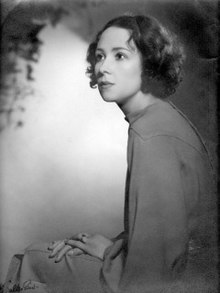
Eleanor Hibbert, the woman behind
Victoria Holt.
Published in 1960, the book merges major themes from Daphne Du Maurier's 1948 Rebecca and of course Charlotte Bronte's Jane Eyre. Just oozing atmosphere and gloom; MISTRESS OF MELLYN is about Miss Marty Leigh, a woman of good family and embarrassed means who takes a job as the governess in an imposing mansion called Mount Mellyn, where lately the locals have come to suspect the master, mysterious Lord Connan, of murdering his deceased wife. There are gossipy servants and secret passages; it's all exactly as you expect and it's fantastic. People tend to talk of this as "Victoria Holt's first book," but for what it's worth, Victoria Holt was a pseudonym; this is actually English scribe Eleanor Hibbert's thirtieth or so novel. She was a busy gal; she published at least one more novel under yet another name in 1960, the year of Mistress of Mellyn, alone.
But Mistress of Mellyn is a classic, incorporating the key elements of gothic so well defined in the discussion here:
A Young Heroine who is sent to
A Big House located in the middle of
A Wilderness, owned by . . .
A Threatening Patriarchal/Matriarchal Authority Figure, who has
Endangered Children Who Need a Governess and who are plagued by
Supernatural Elements, all complicated by
A Demanding, Aloof Hero with the Sensitivity of a Wombat (Wikipedia: “They can be awkwardly tamed in a captive situation, and even coaxed into being patted and held, possibly becoming quite friendly. . . . However, their lack of fear means that they may display acts of aggression if provoked, or if they are simply in a bad mood.)
Anyway-- I've also been obsessed with gothic covers from the 60s and 70s recently, so here are some swell earlier covers for this mysterious, charming book.
Since Alex Van Helsing takes place in the universe of Dracula, students I talk to often ask about the book. I'm happy to talk to any class about Dracula-- and for now, here are some thoughts on the book!
What I Forgot About Dracula by Jason Henderson
Dracula has been on my mind recently and I've been reading "Dracula," the Stoker novel, again.... Dracula has always been a fascinating character for me, and it's strange to occasionally revisit the Victorian-- oh, so very Victorian-- novel of the Count's origin. Better and better-read writers than I have analyzed the book in detail and I won't challenge their accomplishments here-- as a Lit layman, I never could. Instead I wanted to write as a layman who thought he remembered a lot about "Dracula"-- and didn't.
THE NON-PLACE OF TRANSYLVANIA IN THE NOVEL In the book, lawyer Harker goes on a long and creepy journey to visit Count Dracula, a "Szekely" nobleman from Transylvania. The trip he makes is straight out of fable-- the carriage seems to criss-cross back over ground it had already covered and by the time Harker arrives at the castle he is in no real place but a non-place, like the non-place of Coleridge's Ancient Mariner. Which is just as well, because it's clear to me that Bram Stoker really didn't care whether people would be avidly looking up Transylvania and cross-referencing it with Dracula. Stoker makes assertions that serve his novel but not scholarship-- he has Van Helsing insist that this Dracula must be "that old Voivode Dracula" of Transylvania. The assertion has continued forever-- Frank Langella in the 1979 DRACULA says, "I am a Szekel," a Transylvanian-- and Coppola's DRACULA also repeats the idea that Vlad the Impaler ruled Transylvania.
Dracula the Transylvanian exists in the novel only. Prince Dracula, Vlad IV, ruled Wallachia, which like Transylvania was a neighboring province of Rumania. Dracula's ethnicity was Wallach, and his fights with the Turks happened in Wallachia. This matters because it's like writing a story about Mussolini coming back to life and saying he was from France, and then having every work thereafter talk about "that wicked Frenchman, Mussolini."
(Before we get really geeky, let me hasten to acknowledge that Dracula was in fact born in Transylvania. Likewise, Che Guevara the Cuban revolutionary was born in Argentina. History is nothing if not full of complicated detail.) But then, but then--in the novel, Transylvania is a non-place. Transylvania is not-England, and that's good enough.
THE CHILD-BRAIN OF DRACULA There's a fascinating speech by Van Helsing in Chapter 23 in which the doctor says Dracula has a "child-brain" as far as his powers are concerned, and that Dracula is teasing out his abilities, growing more confident and more powerful. It's strange that Dracula would have waited the 400 years between his assassination and the novel's events to start boning up, but it's a wonderful notion-- Dracula's powers can evolve. They do so in the novel; Dracula gets younger and seems to improve in being able to move around as mist. I love this idea, that Dracula by 2003 would be powered up a great deal more than he is at the novel's end, when if we are to believe the entry, he is slain by a Bowie knife. I find, in fact, that my own child-brain is now clouded with years of movies and analysis that suggest a myriad of possibilities for why Stoker allowed Dracula to die by knife when one would presume a big stake through the heart would have been the right choice. Fred Saberhagen famously suggested, as have others, that he doesn't die at the end, but instead disappears and lets the good guys think he died. Sure, why not.
THE COMPLETE CO-INCIDENCE OF DRACULA'S ATTACK ON LUCY AND MINA It's funny how much our familiarity with movies influences what we remember of a book. But there it is: in the novel, here's what happens:
Harker visits Dracula to give him papers regarding the house Dracula is to buy in London.
Dracula takes Harker captive and sics weird vampire women on him, and leaves Harker there.
Dracula goes to England to move into his new place, and starts dining on two local women -- both of whom are connected to Harker.
The rest of the novel happens.
So when Harker finally escapes and gets back to England, he's able to provide crucial details about Dracula Soooo: why does Dracula happen to attack only people actuallyconnected to the guy he left chained up back at the castle? How is it that Dracula's whole clever plan falls apart because he only manages to run into people who know one another? Heck if anybody knows; it seems to be a complete co-incidence, or perhaps the foresight of God placing the tools of Dracula's destruction in his path. Which is a very Victorian novel idea. But it's the sort of co-incidence that bugs the heck out of screenwriters, hence was born the romance gambit. Different stage and screen versions have dealt with the problem in various ways, some of which seem to seep into people's memory. The play on which the 1931 and 1979 Universal Draculas were based simply collapses everyone into one household, and Dracula winds up there and meets everyone at once. The 1973 Richard Matheson script posits that Dracula saw Jonathan Harker's picture of Lucy, Harker's fiancee Mina's friend, and thought Lucy was the re-incarnation of Dracula's dead bride. Thus he goes looking for Lucy having seen her picture. The 1992 Coppola film employs Matheson's "re-incarnation obsession" device as well (giving no credit to Matheson) because it seems to work, although Coppola switches the object of Dracula's obsession to Mina, which makes sense organizationally because Mina is the last victim. But Dracula's attack on Mina in the novel has been strangely remembered.
THE WHOLE DRACULA/MINA THING
You'll recall in Coppola that this is the moment when the panting Mina says, "Take me awaaay from all this deathhhh." Or something. In Chapter 21 of the book, Mina awakens to find Dracula leaning over her, having knocked husband Jonathan Harker unconscious. Dracula says, "Silence! If you make a sound I shall take him and dash his brains out before your very eyes." He reveals he has attacked her before, explaining the lethargy she's been feeling, and as he bends towards her Mina tells us, in perhaps her most oft-quoted line, "I was bewildered, and strangely enough, I did not want to hinder him." Did not want to hinder him. Modern readers have assumed that Mina's deeper, lustier, more fully sexualized self is attracted to Dracula, but remember, this is Stoker's Dracula, rank of breath, hair on palms, and all. Here's a fun party question: If Dracula put a spell on Mina is she still legitimately attracted to him? What does it mean to be under someone's spell? Isn't that a good thing? Heck if I know. But I do know that Dracula just threatened to crush Mina's husband's head until his brain leaks out unless she keeps her yap shut, which seems somehow less charming than Coppola's film would suggest. There's more-- this relationship which so many people call "central" to the novel has so many angles we forget. Remember the wonderful 1979 Langella Dracula, who tells the Mina character (there called Lucy, because that movie swaps the names), "Now it is you, my best beloved one." People love this idea of the "best beloved one" of Dracula, or rather imagining what sort of woman would rise to the rank of best beloved one. But whatever. In the book, Dracula doesn't say that. He says this, (italics mine) in Chapter 21:
You know now, and they know in part already, and will know in full before long, what it is to cross my path. They should have kept their energies for use closer to home. Whilst they played wits against me, against me who commanded nations, and intrigued for them, and fought for them, hundreds of years before they were born, I was countermining them. And you, their best beloved one, are now to me, flesh of my flesh, blood of my blood, kin of my kin, my bountiful wine-press for a while, and shall be later on my companion and my helper. You shall be avenged in turn, for not one of them but shall minister to your needs. But as yet you are to be punished for what you have done. You have aided in thwarting me. Now you shall come to my call. When my brain says "Come!" to you, you shall cross land or sea to do my bidding. ...
Dracula goes after Mina because she's their favorite. Not his. Keen readers will point out that Dracula does suggest that later Mina might be his "companion," but no monogamy on Dracula's part is suggested. Dracula has a box of companions back home, in fact. In Chapter 3 the Count tells the three castle-bound, Harker-panting, baby-eating brides/sisters/whatever they are, "Yes, I too can love… and I shall love again," but come on. Who does this guy love? What in heaven's name would Dracula's favorite be?
DRACULA THE MANIAC After all, this is Vlad the Impaler we're talking about, a guy who loved to impale things so much he impaled rats when he couldn't have people. Who soothed his nerves mutilating birds. A guy who sliced open a pregnant woman who accused him of being the father, who impaled infants atop their mothers, who killed thousands of his own citizens in a day, who solved his poverty problem by burning all the poor people alive in one locked building. This is the real guy I'm talking about. If a movie wishes to show us a Dracula tied to the real Dracula and the novel, are we really to imagine Mina would accept the man who -- but actually I can barely type the worst of his atrocities. History's Dracula was a monster who did massively terrible, perverse, sick things on an almost unimaginable scale, because he wanted to, and because his position and cruelty kept him long free of punishment. Dracula was not a misunderstood man, as the Coppola version, and the Badham/Langella version, and the Palance version, and on, and on, would have us believe. And the novel suggests no such thesis. Actually, the best proof of this comes from within the novel, as Dracula feeds a baby-- a live baby-- to the three vampire women, then sics wolves on the baby's screaming, terrified mother. Dracula is a villain, albeit an attractive one, and it is irresponsible to suggest otherwise. Again, if Mina falls for Dracula, what will she say when she learns about the mother and the wolves? It's all beside the point. Stoker made a novel with a massive character, although the character in the novel accomplishes little of what he sets out to do. (He gives up his invasion fairly quickly.) But looking over Stoker's notes tells us a great deal. Stoker worked on the novel for nearly a decade as characters came and went from the outline, subplots formed and disappeared. But one major point remained in each and every draft: the line from Chapter 3: "Back, I tell you all! This man belongs to me!" The key to Dracula, in the novel--at least to my reading, and your mileage may vary--is ownership and power. If we are attracted to this predator, it is for reasons that make far less sense-and are much harder to accept-- than most of the movies would allow.
You have a new episode of Media Life to listen to, and boy is it a doozy.
I was privileged to spend an hour talking to Ernie Cline, author of the simply awesome 80s-philic NY Times Best Seller Ready Player One, which I reviewed when it came out:
Ready Player One is a Great American Novel.
No joke. It really is. I just finished reading Ready Player One, the debut novel from Ernest Cline, a writer I've met a billion times in Austin but that doesn't matter. Ready Player One, coming from Crown in August, is a great American novel. Every page makes you tremble in awe, that a book can so deftly and even heart-wrenchingly capture so many phenomena of modern life: the love of pop culture, the sacrifice of identity to a better, false, virtual self, the neglect of a world in exchange for a beautiful second one.
So you have to hear the interview! Ernie expounds on writing, writers, the 80s, geeking out, and even slam poetry and his favorite writing book. Check it out!
Hear the new Ernie Cline episode of the Media Life Podcast:
So this week brought a couple of really cool CABIN IN THE WOODS items across my desk, especially if you're a screenwriter.
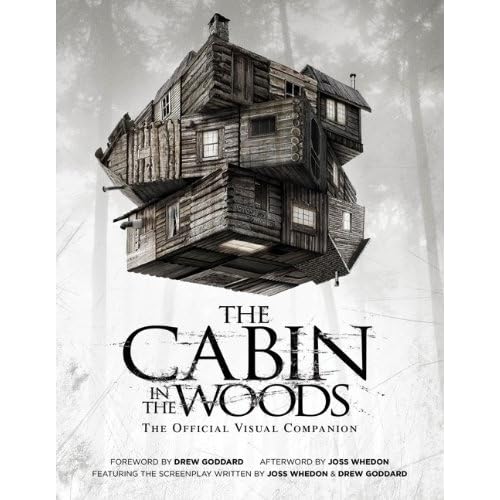
Joss Whedon's screenplay for the movie appears in its entirety -- with copious crazy photographs-- in The Cabin in the Woods: The Official Visual Companion
.
The book is 176 pages long with most of that taking up the screenplay, which means if you want a crash course in how the creator of Buffy writes descriptions, here it is. But the photographs are gorgeous. There's stuff on the creation of all kinds of amazing (and occasionally truly grody) effects and creatures the very existence of which would be a major spoiler. Totally recommended-- but don't flip through this if you haven't seen the movie yet!
Speaking of things not to read if you don't want to know what happens but perfect if you do or already have, I also got the Cabin in the Woods novelization by Tim Lebbon, a Stoker Award winner who has become the go-to guy for turning creepy horror cinema into creepy horror fiction (Lebbon also wrote the NY Times Best-Selling 30 Days of Night book.)
I've started a podcast called Media Life where I interview authors and other people doing cool things. First up: Andrea Speed of the Infected novels, which if you haven't discovered them are Raymond Chandler-style procedurals whose main character is a bitter, gay werecat.
Go to the Media Life podcast or give it a listen here:
Sometimes I come across a blog that just makes me giddy with its sensibilities, and I have a new discovery: My Love-Haunted Heart, a blog devoted to classic gothic paperbacks.
I love gothic covers because they're so unlike the poster-style art of today; they always bespoke a tempestuous mood, always in an original painting.
Sometimes I wish I could have an alternate Alex Van Helsing cover in the style it would have had in the 60s. I suspect there would be torches and a castle.
Definitely check it out!
I just got my hands on a cool item from Titan:
The James Bond Omnibus Volume 003 collects daily James Bond comic strips from the 1960s. Very, very cool, and I love the way these stories play out in a sense more like a TV version of Bond, with Bond co-ordinating efforts with Moneypenney, investigating more, etc.
Check it out!
Description:
The daring James Bond is back in a definitive bumper edition collecting the first period of Jim Lawrence's celebrated run in comic strip form!
Includes seven of Bond's most thrilling and dangerous missions: The Harpies, River of Death, The Golden Ghost, Fear Face, Double Jeopardy, Starfire and Kingley Amis' controversial post-Fleming story, Colonel Sun.
Johnny Depp as Barnabas in the upcoming gothic satire Dark Shadows.
Dark Shadows from Tim Burton is going to be funny, and I'm thrilled. At first I kind of hated that idea-- I wasn't a big fan at first of Burton's MARS ATTACKS, for instance. But Burton clearly seems to be bringing a glorious appreciation of the famous gothic soap opera to the big screen. It looks gorgeous. If you're still a fan of the original-- or want to know what it's all about-- you can find every episode on Netflix. But the Burton/Depp Dark Shadows should probably please the fans by not at all competing with the original, and instead acting as a kind of massive skit about it. Good enough for me!
There is a painting in Madrid that holds the key to a coming Apocalypse, and only Alex Van Helsing and a mysterious motorcycle-riding witch can unlock its mysteries.
Are you ready for more Alex Van Helsing? Finally I can reveal the cover of Book 3, The Triumph of Death-- to me, the best of the three books planned so far. In Book 1, Alex joined the spy organization the Polidorium. In Book 2, Alex had to balance breakneck spy action with girl trouble galore, and the pace picked up considerably. Now in Book 3 it's wall-to-wall suspense and action, with new bad guys, new organizations, and (surprise) a new girl-- a 14-year-old witch/spy who can give Alex and his motorcycle a run for their money.
Posters by the students of PSJA North HS on the many topics of the Alex Van Helsing series. This may well be the first-ever triptych on the live of Dr. John Polidori.
Gang, I had a great week. I spent the past week visiting schools in the PSJA (Pharr-San Juan- Alamo) ISD in Texas, visiting no less than fifteen schools:
LBJ Middle School
PSJA North HS
Sotomayor HS
SW-Escalante MS
Kennedy MS
Liberty MS
San Juan Middle
PSJA High
Alamo Middle
Austin Middle
CTA/ Options HS
Buell Central HS
T-STEM Jeff. HS
Memorial HS
Audie Murphy Middle
I had such a fantastic time. One thing that PSJA ISD did that was new to me was the make the author visit into a reward for readers. Generally the only students who attended were those who had read enough to qualify and had even read Alex Van Helsing: Vampire Rising (proven, believe it or not, by passing an Alex Van Helsing Accelerated Reader test.) The result: these kids were motivated and wonderful, and I spent five days surrounded by students full of questions. We talked about books, writing, vampires, and Alex, and a bunch of other stuff.
At Costa Messa in McAllen with book distributor Pat Anderson of Overlooked Books.
And check it out! San Juan Middle School's librarian, Minnie Lazo, posted an Animoto video regarding one visit that I really enjoyed!
Thanks PSJA ISD-- especially Ms. Nora Galvan, the Media Director who made it all possible!
I'm a real sucker for books about the history of movies-- particularly those that detail intricate stories about how projects came together-- or sometimes didn't. (My taste for these things goes all the way back to the Medved Brothers' Golden Turkey Awards, the grandfather of bewildering backstage stories, among other things.)
I just got a new book called Tales from Development Hell by David Hughes and it's chock full of geeky movie "unhistory." For instance there's a whole chapter on various versions of Lord of the Rings, and a chapter on "The long road to Batman Begins" with details bout Darren Aronofsky's Batman Year One project.
Ever wonder why it took so long to get a reboot of Planet of the Apes going, or what went wrong with Tim Burton's version? There is a whole chapter on that here, too. The new version of the book is updated (for instance, a version I read a few years ago hadn't yet contemplated Rise of the Planet of the Apes, whereas this one does. I love this book. Definitely check it out!
The Castle Dracula Podcast has returned with BRAM STOKER'S DRACULA (1992), and we kind of go off on it. Or at least I do; we have Drew Edwards defending and Tony Salvaggio in the middle. I think I called it the biggest disappointment since The Avengers (1998) at some point.
Hear the new episode of the Castle Dracula Podcast:

Book 3, Triumph of Death, opens with a dizzying, James Bond-style action piece as the plane returning Alex to school is hijacked by vampires that hack a Polidorium computer and disable the cockpit, requiring Alex to fight them in freefall without a parachute. After surviving this harrowing experience, he gets to briefly catch up with his friends Paul, Sid and Minhi (and meet new student Astrid Gretelian) before the vampire organization known as the Scholomance attacks the Swiss town of Secheron. Throwing a veil of darkness around the town, the vampires—under the command of Elle, Alex’s undead nemesis—commence to construct a bizarre tableau heralding the arrival of Claire Clairmont, resurrected queen of the dead and former lover of Lord Byron, now known as the vampire Icemaker. The Scholomance is finally driven off by the Polidorium with help from Alex and Astrid, who turns out to be a young agent of the Hexen (a world-wide organization of witches to which Alex’s mother belongs). ...






 .


