Jason Henderson's FB Feed

Thursday, August 29, 2013

Insane Ramblings of the Teenage Mutant Ninja Turtles in TMNT: Out of the Shadows-- all in one place!

The guys at Kotaku have gathered a bunch of the insane ramblings of the Turtles in the new game Out of the Shadows into one video. You can check it out here.

These lines are "random banter," meaning they generally play when not much else is going on. But if you just sit still, you can hear almost all of it, which is what they did here.I wrote these lines, but the way these things work, this is the first time I've heard them read outloud.

For the record, by the way, this is Michelangelo's entire meditation on pizza:

You know, pizza isn't just a thing. It’s a life, it’s a world. You can put anything on it; there's pepperoni, sausage, bacon, onions, shrimp, pineapple for some Hawaiian flavor. I've never been to Hawaii, but I think “all right, they have good pizza.” Green onions, olives, green olives, black olives there totally should be red olives. Tomatoes, dried tomatoes; that’s artisanal. I think that means expensive. Extra cheese- that’s not really a topping, but everyone acts like it is. Cheese in the crust. Mind: blown. Red pepper, crushed red pepper- which is a totally different kind of pepper. JalapeƱos, green chilies, chicken. In New Orleans, they have jambalaya pizza. What a great place that must be. Mushrooms, black mushrooms; Shiitake, they call it. Japanese, awesomeness. Canadian bacon; that’s amazing, it’s not quite bacon, but it is. The little things in life.
Check out the video at Kotaku.


Monday, July 8, 2013

No Spoilers: Only see THE CONJURING if you want to get the %$%& scared out of you.

Seriously-- I caught THE CONJURING at a preview screening in Denver and I am so thrilled about it. My arms are still tingling from this movie-- that's the frisson that good horror gives you, the shiver on the back of your neck and for me all up and down my arms. I haven't actually jumped in a movie in years, but I did in this one. The trailer is below-- it's really all you need.

THE CONJURING felt like a genuinely scary piece to sit beside the greats of ghost tales. In fact that's part of its charm, this movie both works as a scary movie and also as a sort of love letter to supernatural thrillers like LET'S SCARE JESSICA TO DEATH, GHOST STORY, POLTERGEIST, even HALLOWEEN. This is a movie that loves American Gothic. It may be the best ghost story I've seen since THE CHANGELING. I know that's high praise, but I mean it-- check out THE CONJURING when it opens July 18, but only if you want to spend the night jumping.

Wednesday, June 26, 2013

Clockwerx hits Comics Stands!

CLOCKWERX , a new Humanoids Graphic Novel from animator Tony Salvaggio and me is out in the United States and I am very excited. You can check out this adventure we pitched as "Sherlock Holmes Drives a Mech" by checking with your local comic store or ordering from my favorite comic store, Lone Star Comics, otherwise known as MyComicShop.
Check out some previews of the amazing art from French artist Jean-Baptiste Hostache below.


Friday, June 21, 2013

Paperbacks: Doomed or Not, I'll Miss Them

Slate has an article today on whether paperbacks are doomed or not.
If that sounds hyperbolic, look at the numbers. The 2012 BookStats survey (one of the more reliable metrics of book-format sales industry-wide) revealed that 2011’s e-book net sales were double those of 2010. In the all-important “adult fiction” category, e-book revenue—for the first time ever—outpaced that of print. Amazon probably saw that coming: In 2011, they reported higher sales of e-books than paperbacks and hardcovers combined. And the trend seems destined to hold steady. The recently released 2013 BookStats report observes “an even more widespread popularity of e-books than in past years,” noting that e-book sales have grown 45 percent since 2011 and “now constitute 20% of the trade market.” Meanwhile, according to Publishers Weekly, between 2011 and 2012 the number of trade paperbacks sold fell by 8.6 percent, and total mass-market paperback sales fell by a whopping 20.5 percent.

Conventional wisdom holds that e-book sales eat into paperback sales but not those of hardcovers. So if e-book sales are growing exponentially, it seems fair to assume that paperback sales will plateau, dip, and eventually fail to justify the cost of printing them: So long, softcovers.
It's probably true; Slate's article comes down to "the data suggests paperbacks are doomed, but certain people hope not so maybe not." In my experience you should follow the data. There will be paperbacks, but they will be specialty items.

I'm part of the problem as a consumer: I tend to buy the ebook first if there is one available, then a hard copy if it's not.
But paperbacks are still important to me: I like them for plane rides when you're taking off and landing (that period when e-readers are verboten) and I will mourn the loss of old paperbacks, which are a kind of art that we will appreciate when it is gone.

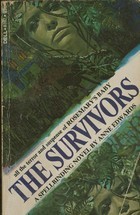
Personally I collect old books-- this week I picked up a completely lost Gothic horror that I can't wait to start. It's by Anne Edwards, a major author who wrote HAUNTED SUMMER, the Byron/Polidori book. The book is called THE SURVIVORS, and I call it completely lost because I could only find it used, because there's no e-book and it's out of print. There are countless old, out of print books that are not in e-book form, and paperback may be the only way to get them.

And I'll miss the smell-- find an old paperback and smell it, and think of the book stores of your childhood, and this was how reading smelled. Not before our time, and not after. The smell of old paperbacks is a timestamp that will be lost forever and near-impossible to describe.

The main reason I love to read old books is it helps me artistically, by the way-- I can riff on things people don't remember instead of whatever is out there now, folding the conversation over. It's like having an ongoing conversation with shadows.

THE SURVIVORS
Publication Date: June 1969 A beautiful and lost girl; a man obsessed with learning the undiscovered truth about the shocking slaughter of an entire family; a high-speed journey along the razor edge of madness into the jaws of unimaginable horror.

Thursday, June 20, 2013

Movie Violence Hits the Uncanny Valley in Man of Steel

I think movies are actually scarier for adults sometimes. There's been a lot of talk about the "pornographic" nature of the destruction of buildings in Man of Steel-- with some articles even trying to sum up the likely loss of life that might result from the destruction during the final battle.
And I've thought about this and here's what I've come to: adults freak out about big superhero battles a lot more than children do because adults bring context to collapsing buildings that children don't. So the effect you get is this: 

(Superman throws Zod through five blocks' worth of high-rise buildings, which all collapse.)
Dad (thoughts): Holy %$%$ there must be what, 3, 6, 9, 12 thousand people in those buildings alone, not to mention the glass WTF SUPERMAN?
Child: Wow! Superman just threw Zod through a bunch of buildings!

So maybe it's not for us. I remember that DIRTY PAIR used to leave this kind of destruction and no-one cared. In GUNDAM 0083, remember when they crashed an entire bioship?

A reader joins in: Come on. Dirty Pair is an anime about bounty hunters. Gundam 0083, I don't even know what that is but it sounds like an anime too.
It is.
So that's not the same. Animated people aren't-- um.
Animated people aren't what? Waiiiiit for it...
Oh, right.
Yeah, I know. Superman is a real guy.
Okay, they're not real and neither are the buildings in Man of Steel.
Yes. I am sorry for the loss of the off-screen imaginary people.
But it seems worse. I guess because it looks so real. In cartoons it didn't look real. I can't have as much fun when it looks this real, because I know it's not real but it looks real and it makes me uncomfortable.
Yes, and I feel it too. Superhero violence has finally reached the uncanny valley. Eventually we're going to have to decide if we can view imaginary violence without the distance created by obvious artifice, or if we will demand something else. But that decision has yet to be made.

Tuesday, June 18, 2013

A Quick Visual Tour of Fahrenheit 451

I'm a big fan of Fahrenheit 451 by Ray Bradbury, which is so beautifully written and even works as a futurist tract on the world we live in-- writing in 1953, Bradbury predicted giant-screen TVs, earbuds and reality TV.

There's a wonderful tour from Academic Earth on the book that gives you a quick tour of its themes and characters. It's whimsical and fun, and I recommend checking this and other books from the site out.
Created by AcademicEarth.org

Friday, June 14, 2013

Don't believe you can't: Write in as many media as you want

I used Grammarly to grammar check this post, because life is too short to look for split infinitives with your bare eyes.

Here’s something I hear a lot: a writer will say, “novelists don’t make good screenwriters,” or “screenwriters shouldn't try to write games,” or “comic book writers shouldn't try to write novels.”
We know these sentences are nonsense (I could choose a coarser label) because when someone who does something for a living offers you advice that happens to discourage you from joining their profession, they probably have their own and not your interests at heart. And that might not be completely conscious; a lot of people don’t realize the philosophies they hold dearest are heartily buttressed by convenience. So if you hear someone say that, nod and smile and whatever it is you want to write.

Because here’s why it’s really nonsense: different kinds of writing are different, no doubt about it. But a good writer can excel at more than one kind of writing. You might have the medium you’re best in, but if you’re a writer, you’re probably a few steps ahead in another medium than someone who has no felicity for language.

The rest is just details, rhythms, styles.   I actually thrill to the difference-- a screenplay is not a novel is not a game script.

This week I worked on a script for IDW comics, the first issue of a miniseries about a popular TV character.  Comic book scripts mostly offer challenges about space and pace: a comic book script usually runs exactly 20 or 22 pages, usually 5-7 scenes. I usually outline in Word or Excel, write comic scripts using Final Draft, the screenwriting tool, then deliver the script to the editor in Word, where we do the editing.  Another comic I wrote with Tony Salvaggio, Clockwerx from Humanoids, is coming out in hardback, and I wrote several interview responses.


  • Medium: Comic book script
  • Format: Feature Screenplay Derivative
  • Tools: Final Draft, Excel, Word


Meanwhile, I worked on a novel. Genre novels like the modern horror book I’m writing usually run 300-400 pages long. There’s no set number of chapters or pages—unlike in comics, you have to hew closer to a sense of how the story is going and when you need to turn. I outline in Excel and write in Word.


  • Medium: Prose Novel
  • Format: Long form prose
  • Tools: Word, Excel


I also host a podcast, the Castle Dracula Horror Movie Podcast. For that,  I have to write an introductory script each week and prepare my questions. I intro the show; the rest is a panel-type discussion.

  • Medium: Podcast Script
  • Format: Radio Script
  • Tools: Word


At the same time, Teenage Mutant Ninja Turtles: Out of the Shadows, which I wrote the game screenplay for, got announced as part of the Xbox Live Summer of Arcade 2013. Game scripts are a different beast—I wrote those partly in Final Draft and partly in Excel.

  • Medium: Game Script
  • Format: Feature Screenplay Derivative for cutscenes, Database for incidental dialogue
  • Tools: Final Draft, Word, Excel


I’m going to spend some time blogging on each. They’re all different and they all offer challenges. But I wouldn’t have it any other way, and you shouldn’t either. If you write, you work with words. The rest is skill, and if you’re still alive, there’s wondrous time to learn.

Wednesday, May 22, 2013

New Teenage Mutant Ninja Turtles trailer, new Alex Van Helsing French Covers

Some fun stuff I received this week.
First, I just got a look at the covers for the French editions of Alex Van Helsing:
As I wrote to a friend earlier:
I go to a lot of schools and libraries to talk about my book series about Alex Van Helsing, and people always want to know about the covers. Especially the girls, because the guy who plays Alex on the covers is a good-looking-- and very earnest and serious-looking--- young man. And I tell everyone the truth: I don't know who the actor is, though he does look like the character. In fact I have no input into covers at all-- when the publisher asked me what should be on the cover I pictured something with all of Alex's team in a group shot looking all bad, and I wanted to get Alex's motorcycle in. HarperCollins opted for photographic covers focusing on the main character. And that's the style of them. In the third book we thought about putting Alex's girlfriend Astrid on the cover because it's a shared adventure, but in the end they opted for the covers looking the same. I should note that in the French version, you instead have a shot of Alex's shoes and not him, with different colored shoes for each book! (By the way: I don't really name the books either. I write the books and suggest a title, and maybe it gets used, and maybe not.)
So excited to see Alex cross the language barrier!

Meanwhile, next month brings us the release of a game I wrote the screenplay for and am very excited about: TEENAGE MUTANT NINJA TURTLES: OUT OF THE SHADOWS.

The amazing team at Red Fly is releasing teaser trailers along the way, and this time the newest trailer focuses on Raphael, the toughest turtle.

I can't say much about the plot-- we don't even have a release date-- but I will say this game was a lot of fun to write dialogue for, especially in the idle sections where we could just let characters talk.


Thursday, May 16, 2013

Clockwerx Interview (Graphic Novel Clockwerx coming next month from Humanoids!)

Hey guys! Tony Salvaggio and I have a new graphic novel coming next month from Humanoids: Clockwerx, about a detective who joins a mech pilot team in Victorian England. Check out this interview!

Saturday, May 11, 2013

A fan asks questions about HIGHLANDER: ELEMENT OF FIRE

It's been a busy period-- not only have I moved from Texas to Colorado, but I've been busy with a new book as well as several tie-in gigs. I've been busy as heck writing the script for this Summer's TEENAGE MUTANT NINJA TURTLES game OUT OF THE SHADOWS, which is now done, and I'm kicking off another job.
I wanted to update and answer some questions about writing. Generally, I write whatever comes my way, either bubbling up from inside or sent from without.
Whatever product we create, most of us consider ourselves first and foremost writers, a label sufficient in itself. Most write because they love words and love using them. I write for a lot of reasons-- I think creating heroes that readers will want in their lives is an obsession of mine-- but I love challenges, especially the challenge of a new assignment I don't have complete control over.

For instance, I like writing Alex Van Helsing into a terrible corner and then having to write him back out of it, but that's nothing compared the challenges a writer faces with someone else characters. I might have what I think is the perfect idea, but it might not get approved-- maybe I think the Turtles should have a funny argument about old science fiction movies, but the argument might get cut because the owners already plan for a conversation like that in another project soon. That kind of cut-- which means you have to put in something else-- happens all the time. The art of writing demands control, but the art of writing for others demands equal parts control and humility.

I started out writing standalone novels in college, beginning with THE IRON THANE, a fantasy adventure about MacDuff, the hero of Shakespeare's MacBeth. But my first job working with someone else's characters was a tie-in novel for a TV series: the book was Highlander: The Element of Fire, the first tie-in to the Highlander series. I was 23 and busy with law school, and there are choices I made then that I wouldn't make now, but what I remember loving about it was that the producers allowed me to a) make the book a team-up between the characters of the Highlander TV series and the Highlander film series. I worked hard to blend the two.

But. I wrote the book in about five weeks with very little revising before publication, and it shows at times. There are scenes I would change or cut if I were doing them today. So it goes.

I mention all of this because out of the blue this weekend I got a series of questions from Alexander, a reader who enjoyed The Element of Fire so much that -- and can I say this is bizarre to hear about something I write when President Clinton was in his first term-- he had spent a lot of time thinking about it:

I'm a die-hard Highlander fan, and particularly, your novel "The Element of Fire", which I think is a better story that handles both characters of Connor and Duncan MacLeod in a much better, dignified and honest way than any of the comics and, especially, the "Highlander: Endgame" film did. On top of that, I feel that the story is an interesting and fitting exploration of the first three hundred years of Duncan's life, in as far as his doubts about the Game and Prize are concerned (even though it wasn't your intention, as you had once pointed out in an interview,I think it works still), and how he morphed, basically, into the Duncan of the show.  ...
But to me, the biggest and most amazing accomplishment, was the detailing of the Connor-Duncan dynamic. I love how you wrote those characters, and how they interact with one another. I love you managed to showcase their changes but also their sameness through the years, as well as point out their differences and similarities. To me, you basically set that dynamic, you made that relationship work, and as a fan who loves these characters and the franchise (despite the efforts of its producers to ruin it, movie-wise), I am indebted to you for this experience.
So on that note, I would like to thank you for this magnificent story. It may not be the greatest of literature, sure, but as a story that explores these characters through the years in a rollicking adventure, its one of the best. Thank you so much for this wonderful contribution.
And he had questions! So I decided-- if a reader is actually spending time thinking about a book I wrote twenty years ago, I should see if I remember enough to answer.

So with no further ado, here are the questions I received, the answers to which require me to dig deep into the recesses of my mind:


Q: What do you think of the story so many years later? Would you have changed anything story-wise, or character-wise?
A: Oh, man, there are many things I would change-- for one thing, you'll notice that the book reads in chronological order, so that it starts far in the past and moves forward to the 19th century where most of the action takes place. On the TV show the formula was to introduce a bad guy, then have Duncan take us back and forth through flashbacks that told a parallel story in the past. I wrote the book this way, in the style of the show. But the publishers were unfamiliar with the format of the show and re-arranged the book to be in chronological order. That's on them. But there's one worse that's all on me-- there's a scene where Duncan is pretty brutal to a crooked person he's interrogating, and I regretted the level of violence after re-reading it, and wish we had cut the scene. Sometimes you're working so fast that you don't realize how a scene reads.
Q: What DO you think of Connor and Duncan as characters to write? Which of the two was easier to write, and which was the most fun? Was it challenging that you had to simaltenously a lot of information for Duncan, and not as much for Connor?
A: I liked writing Connor a lot more, because he was such an oddball, with that untraceable accent and strange, detached nature. But I really loved showing them together, with Duncan and Connor debating how to be an Immortal.Q: Do you think Duncan cleared up his doubts about the Game, or do you think he had lingering doubts about it? In the Series, "The Messenger" episode, which after the book, he's adamant that the Game must be fought, because all it takes one Immortal to not lay down his sword. Did Duncan finally learn Connor's lesson?
A: Well, Duncan kept evolving in the TV series-- and to my knowledge never once experienced the faith crisis that I explored in the book. I just thought he should experience it-- not once in the show had either character expressed doubt that the Game might not be real. That there might not be a prize after all. I fought really hard to keep that line of questioning in, because the TV guys didn't like it-- yet in the end they allowed me to keep it.
Q: Have you read the Dynamite Entertainment Highlander comics that center around Connor and Duncan, and the former's dealing with Kurgan's Dark Quickening? What do you think of them, if you have?
A: Never have! I should pick them up, I guess...Q: In an older interview, you mentioned that there were doubts about allowing Connor into your story. Had you had more of a blank slate, and among other things, would you have Connor in a bigger role in the story? Fans have noted that he's basically in the sidelines for the story, and would've liked him in a more proactive role.
A: Yes-- he is the mentor character, not the lead. That's because it's a Duncan book with Connor in it. I think you could have a Connor story with Duncan in it, but I think you have to pick one or the other to be the lead. (Having said that, yes, you could have an equal-time story with two leads, but in this case it was everything I could do to get Connor in as the mentor!)
Q: And after having Element of Fire, what do you think of Highlander: Endgame, the movie that paired them in the big-screen? ... What do you think of the other Highlander novels? You have the distinction, apart from writing the only Connor-Duncan story in prose, but also having written the first novel based on the TV Series. Have you read any of the follow-up novels, and if so, what is your opinion on them?
A: t's so long since I saw the movie that I shouldn't even venture a comment. I know they weren't having philosophical discussions about the game. As to the other books-- I never did!
Q: Was there ever an intention of writing a continuance to the novel? Seeing as how the novel is set entirely in the past, and the character of Lauren survived, was it ever a hope of yours to perhaps write a follow-up story, set in the present?
A: YES! I wanted more of Gabriela Savedra, especially. I loved that character, the Spaniard Immortal who apparently went to train with Amanda.
Q: Finally, what do you think of the franchise, overall? What got you into Highlander, and what has the experience of working of EOF meant to you?
A: But I was very lucky to get that gig and have been thankful for it ever since, because it influence my whole career-- because I'd written THE IRON THANE, I got Highlander. Because I'd written Highlander I got not only some Marvel Universe books, but a job with EA doing game scripts. I was so thankful for this book for the opportunity to write in a universe I loved, and for the doors it opened. I'm still thankful.

Thanks!

Wednesday, April 10, 2013

Write the scene you have to get through now.

Here's some advice I wrote to myself this evening (1500 words!) regarding something that I face over and over with books: Write the scene you have to get through. Don't skip it if you know it needs to be there, just write it. Write it badly if you have to, write it short, write it in bullets and take the bullets out so it looks like paragraphs, write it in dialogue, write it in verse. Write the scene you have to get through and get through it; otherwise you just get stuck at that scene, and you'll come back to the next session and there it will be, waiting and you still don't want to write it. Write the scene you have to get through, and then get on to the next scene you do want to write. Write the scene you have to get through now.

Monday, January 21, 2013

Switching to Jason Henderson blog

FYI-- I'm going to start updating my Jason Henderson blog and merging this with that one, so feel free to meet me over there.

Wednesday, January 9, 2013

FUTURE SHOCK: In the year 1972, Orson Welles is freaking the f--- out.


If you have not seen Future Shock, a 1972 documentary based on a hit book about the rapid advance of technology, you must. You owe it to yourself, both to laugh and to kind of worry a little.
Imagine how disconcerting! The movie says, to go the airport and be faced with a gate agent who might be a robot!  This is a world before: the Internet, automated phone menus, and kiosks.
The phone book has to be re-written EVERY DAY, the movie tells us, in a grim sort of way that indicates that this fact alone is some kind of Apocalypse.
Orson Welles, the evil drug manufacturer in The Third Man*, here is our narrator, smoking his cigars and walking us through a litany of the frightening and fast changes wrought by technology. "Future Shock" is a term coined by futurist Alvin Toffler, and it kind of means "too much change too fast," which some would call "the beginning of the Singularity," though I prefer "Wired Koyaanisqatsi."About the phone books?
"Nothing is permanent anymore... The telephone directory is re-written every day in an effort to keep track of the mobile society, pages printed out by the computer, deletions, additions, numbers, the rate of change reflecting the fact that where we live means less and less as we breed a race of nomads... few suspect how massive, widespread and uprooting these migrations are."
About that. Oh, I believe that it's true that the phone books were soon (as in, 40 years later) rendered mostly obsolete, but is it true that the freedom to move around has been-- wait a minute. He didn't even really say what was bad here. Just that it was happening. And that was sort of scary. How scary? Next we interview young people aimlessly going places on buses, and they look blissful, but Welles sounds disturbed, so I guess they are scary.

The world is changing fast, the movie shows us, demonstrating social changes such as communes and gay marriage. Unclear whether that is supposed to be scary.

The movie is really just a panicky litany with the question:
"Is there danger in the path we're taking? What happens to the definition of man? Who is he? What is he?"

Some of the future really is scary, if a little oddball in presentation: "Babytoriums! Genetic superstores of the future!" Which you will shop from using a slide carousel, because of course we can picture genetic manipulation but no one expects the iPad.

Marriage is in trouble, and Future Shock lays this danger at the feet of Rapid Change:
"In our society marriage is ideally based on love... but the likelihood that people will grow and develop at the same rate becomes more and more remote for rapid change places a heavy burden on the fragile thread of love." To illustrate this, we see people bickering more or less the way they probably did before Future Shock and after Facebook, and I'm not sure rapid change is at fault.

"With technological changes, more changes will come!" Orson Welles says, still talking about marriage, I think. Then he goes off on a rant that I took down this way because it was going too fast:

Confused, helpless, unable to cope! Stress!

I was moved by one thought experiment expressed by the movie, about the loss of choice *not* to enhance our lives with technology, which anyone who can't turn off their smartphone could lecture any of us about. I'm one.

It introduces us to the facelift and figures this to be amazing.

It all seems disconnected from the future that arrived and yet not a moment is actually wrong (except some things that have not come to pass, such as altering our skin color for fun, though some of us are orange.)

And then Toffler says this, and he's darn right:

“We can no longer allow technology just to come roaring down at us. We must begin to say “No” to certain kinds of technology and begin to control technological change, because we have now reached the point at which technology is so powerful and so rapid that it may destroy us, unless we control it. But what is the most important is we simply do not accept everything; that we begin to make critical decisions about what kind of world we want and what kind of technology we want.”
The documentary is 43 minutes long and on Youtube-- hit my playlist above to try it.


*No, come on, I know who Orson Welles is.

Tuesday, January 8, 2013

Rick Olney, a Sad Story in Comics, Passes Away, and How To Stop Spending Money on a Lost Cause

In case you missed it, Rick Olney passed away over Christmas. Olney was well known in comics because he had a history as a convention organizer that was marked by more canceled events than successful ones, and he left a string of artists who he owed money to for commissioned art. I have no doubt that those claims are true, but he never owed me anything.
Personally, I encountered Rick only once a few years ago when I was invited to speak at a convention in upstate New York called Mighty Mini-Con, organized by Rick. It was happening just as I had a horror series coming out, so I thought, fine, I'd go up to Syracuse, do a show, and then my wife and I would go up into the Adirondacks for some hiking with a friend who had a cabin there. That's what we all did, except that a few days before the trip, the show was canceled. I didn't much care because I was excited about going up to the cabin. I literally never gave it any more thought, although in theory I could have stewed about having spent money on a ticket, and if I didn't have other plans, maybe I would have.
So I crossed paths with Olney and got off without a scratch. Others have stewed about him for years. I read a screed today by a gentleman who was angry that he hadn't received $100 in over a year it was owed.

This was actually more interesting to me than Olney himself, because it ties into a general rule that I think is very important for freelancers.
It's important to demand your payment. But I have advice for anyone still owed money after a reasonable time, something I know from freelancing for over twenty years.
Some debts just go bad. Some debts are like throwing $100 out the window. If it's a pittance like that (I'd say even up to a few hundred), stop spending money on this problem. And: you are the money you are still spending.

Jason's Rule For How Long to Worry About $100* Someone Owes You

  • figure out your minimum hourly payment (M)
  • figure out how many Aggrieved (A) hours equals that $100 ($100/M=A)
  • then make a promise to yourself that you will not spend more than that time worrying about it. (Worry<=A)
By my calculation, at "A" hours you will have passed the point where you will you will have then lost $100 and spent another $100. That's $200 in value down. Let that be the end of it. 

Your time-- your life-- is worth money. So is your pain. And it's yours to squander. You cannot spend any more value. Let it go. You will live longer, or you might, but anyway, you have to know when to walk away from someone who owes you money.
Maybe I'm missing the point, and to you powerful Olney debtors who may read this, understand I may not get it, maybe I'm not understanding how bad things got, or maybe obsessing over Rick Olney was a joy in itself, like hiking or watching old episodes of Law & Order. But spending thousands of hours obsessing over someone who owes you a pittance just seems like a bad investment.


*Substitute your own small claims amount in here, because the formula will work regardless.

Thursday, December 13, 2012

VOYA on Alex Van Helsing: "Fast Moving Plot And Gripping Action"

Here's a Christmas present I wasn't expecting-- our good friends at VOYA, who named Alex Van Helsing: Vampire Rising a "Best of 2010," have weighed in on The Triumph of Death!
You can catch the rest in the December issue of VOYA. You can also find them on Facebook!


"This third Alex Van Helsing book is packed full of action and continues to deliver character development with all the same likable characters... with a fast-moving plot and gripping action adventure, making it a most enjoyable, perfectly entertaining novel. ...Alex still copes and adapts using his special abilities and deals with just how special and unique he is in the fight against evil.Hopefully, the author will decide not to end Alex Van Helsing as a trilogy and instead continue entertaining readers with more adventures and vampire mythology, similar to Colfer's Artemis Fowl. This excellent book is a must-have for all libraries, especially where horror fiction is hot." 


Thanks, guys!

Sunday, November 25, 2012

Dark Shadows Visual Companion: Get it for the Gothic Vampire Freak in Your Life

It's no secret that I'm a Dark Shadows freak, although I came late to the party. I first discovered the 60s vampire soap opera a few years ago and instantly loved it. There's something hypnotic about the show-- go watch a few episodes on Netflix or DVD and you can get sucked into the sheer otherworldly gothicness of it all: the spooky harbor town, the winding corridors of the family mansion haunted by ghosts and vampires. And to me the fact that it's a daily soap opera only contributes to the magic-- the falseness of the sets, the cardboard and wobbliness, makes the unreal strangely more real. I also really admired the 2012 version-- in my review I wrote:
Tim Burton's Dark Shadows knows the whole terrain of the show, and it knows more. It knows that it can have it both ways, parodying the show while constantly showing such familiarity that the jokes feel genuinely affectionate. It knows that somehow 1972 is funnier than 1966, so we get to see Barnabas come back to a world of the Carpenters and Alice Cooper. It knows that Johnny Depp is not Jonathan Frid, so his Barnabas is completely different-- a hilarious meditation on vampires in general, a reptilian, cursed, alien creature, whereas Frid's Barnabas was a rather discreet vampire most of the time, no more alien than JR Ewing. Depp is funny here, and is in almost every scene. And man, it knows the gothic tradition. The brooding house, the tortured young ingenue, the secret pathways. If you feel you've seen all of Burton's tricks before, think of it this way: all of his tricks belong here, in Dark Shadows. Fans of the show should love this adoring letter to Collinwood.
I felt the way I did because Tim Burton has the same strange fascination with the show, and his movie is an astonishing homage. So now I just got the Christmas present of all presents for Dark Shadows fans: the Dark Shadows Visual Companion. This is a heck of a coffee table book-- a visual tour through the making of the film, with sections on the cast, the writing, special effects, costumes, and more. My favorite is a pair of photographs--on pages 8 and 20-- full cast portraits, each with star Barnabas (Frid and Depp, respectively) in the center. I can't make you love DARK SHADOWS-- but if you do, you will love this book and go back to it often.

Tuesday, November 6, 2012

Creepshow! Stephen King Retrospective Continues

The Castle Dracula Podcast continues its Stephen King Retrospective with Creepshow in a SUPERSIZED episode!
Hear our latest episode:


Thursday, October 25, 2012

Happy Halloween: Download Halloween Man vs. Invisible Man FREE at Indyplanet

Hey Gang- if you've heard me rant about how wonderful Halloween Man is, you MUST go check out Indyplanet Digital, which is having a Halloween special on Drew Edward's fantastic indy comic-- including my recent favorite Halloween Man vs. Invisible Man, collected, FREE. About that one I recently wrote:
Drew Edwards completes the four-part monster bash between Halloween Man, the zombie with a heart of gold and a Reed-Richards-smart girlfriend faces off against HG Wells' most evil creation, The Invisible Man. I've really been enjoying this story because it's played like a monster procedural. ...with Halloween Man investigating a series of attacks in the leather district of Halloween Man's home, Solar City. Soon it became clear that "The Terror" was obsessed with the clientele of the leather bars and could attack them with near-impunity because the police had no interest in patrolling the district.
That left Solomon (Halloween Man) to pick up the search, one outsider looking after a community of outsiders. But it turned out that The Terror was actually none other than the insane Griffin, the sadistic, brilliant scientist who created a formula to turn himself invisible, and that has now rendered him impotent and insane. This four-part story has been illustrated by Sergio Calvet, who I think brings just the right quirky, even cartoonish tone to the book. His is one of my favorite interpretations of Halloween Man yet, handling horror, violence and tenderness equally well. This is great stuff. Halloween Man continues to be a favorite independent comic of mine and one of the few that I think holds up next to any new comic on the stands this week. Definitely check it out if you haven't had a taste.
So now is your chance to sample this comic that I LOVE-- and I say that without a penny of payola-- for free, so check it out!

Friday, October 12, 2012

"Harvey" at Level Ground Arts Theater in Dallas: Oh So Pleasant

"Good heavens, man! Haven't you any righteous indignation?"
"Oh, Doctor, years ago my mother used to say to me... 'In this world you can be oh, so smart, or oh, so pleasant.' For years I was smart. I recommend pleasant."
I have wanted to see Harvey, Mary Chase's Pulitzer Prize-winning play, since I was a child, but it's not a play that turns up very often. That's a sad thing because this is a beautiful play: the story of Elwood Dowd, a man who confounds his family because he insists that he is always accompanied by a gigantic invisible rabbit, Harvey is always able to bring me close to tears with the serene wisdom of its central character.
Elwood, played here by Dick Monday, is not actually insane, although his family at various times wants him committed, and he is not naive. What you have in Elwood is a man who has absorbed the bitter lessons of life and responded with an entire way-- a dao of Dowd, if you will-- that involves kindness towards everyone he encounters. Elwood is a brave character. He knows what people think of him. This is better. There is a central monologue where you get a glimpse of the inner workings of Elwood, who knows that the people he meets in bars need him as much as he needs his giant rabbit friend; they need him because they must tell someone of "the big, terrible things they have done, and the big, wonderful things they will do, all very large, because no one ever brings anything small into a bar."
Monday delivers these lines in a pitch-perfect performance in the same intimate theater space as a screwball cast rotates around him: Elwood's hyperventilating sister (played with 1950s fusssiness by Laura Jones), his conniving but ultimately lonely niece Myrtle May (my fellow UD alum  Audrey Ahern), a pair of would-lovers in denial (Megan Ruth Nieves and Robert Shores as nurse and doctor), Shawn Patrello as a renowned psychiatrist who just wants time to stop and maybe his own invisible rabbit, and clown (really! she's been a clown!) Tiffany Riley playing two different non-clown women, a stooped old socialite and a prim younger socialite who is instantly floored by the charm of Elwood.

You know what comes next after Harvey? The next production will be the holiday play Santa Claus Conquers the Martians. He's aided by a
That's the sort of thing you get at the Level Ground Arts Theater, a company founded by writer/director Bill Fountain, and it's clear that Fountain has a singular, almost quixotic vision. I said I wanted to see Harvey and hadn't had the chance-- and yet here it is. I've watched with something like wonder as LGA has brought us plays of Carnival of Souls (a harrowing, chilling production based on the 1962 cult film but transplanted to Hurricane Katrina and its aftermath, Metropolis (performed silent, to music), and even cult oddities like Manos, the Hands of Fate. The work of this playhouse is so approachable and yet utterly insane that it reminds me of Elwood, the friend of Harvey: Level Ground Arts begs to be followed because there are wistful visions and strange surprises here.
I forgot to mention: Fountain shows up in Harvey, too, in an almost-cameo as a cab driver who gets to drive home the lesson of the play with a few lines of dialogue, that sometimes the mad are worth listening to, and even following.
Harvey plays weekends Level Ground Arts Theater in Dallas until Saturday October 27. Make it a date. It is both smart and pleasant, a rare combination.

Tuesday, October 2, 2012

BiblioJunkies' Shel on Triumph of Death: modern day Hardy Boys with high tech gadgets and vampires

We have a great new review of THE TRIUMPH OF DEATH from our old friends at Bibliojunkies. Shel writes:

This third installment of ALEX VAN HELSING has Alex and a mysterious new friend, Astrid, trying to stop the “Triumph of Death” a spell which would create darkness and allow vampires to essentially take over the world...
...
As with the rest of the series, The Triumph of Death was fast-paced action-adventure and completely irresistible.  Alex is such a lovable character and the world created by Henderson is so much fun.  Probably the most mature 14 year old I can think of Alex's adventures are great for all ages.  I've recommended this series to people from age 6 to adults in their 50s and 60s.  Whenever I recommend the AVH series to someone, I tell them to think of modern day Hardy Boys with high tech gadgets and vampires.
I know the book description says that this is the final installment in the series, but I really hope that isn’t so.  I would hate to say goodbye to Alex and friends!   I have been thinking all day that I cannot be the only person who thinks AVH would make a great movie or tv series...
Hardy Boys. See that? It's like she read my mind. That's what I really want to do here, adventure stories like I used to read. Personally, I love wide-open series like REACHER and Cornwell's Kay Scarpetta, and that was what I've tried to emulate-- a world where instead of one epic story for the characters, you have a set of characters who conceivably can go on forever.